
Make & Can Blueberry Jam From Frozen Blueberries
Homemade jam is probably one of the easiest things for beginning canners to make. Whether you plan to use your jam on toast, as a filler for baked goodies, or as a thoughtful and delicious homemade gift, this recipe for blueberry jam from frozen blueberries has been a longtime hit with our family! For several years now, I have made this blueberry jam during the winter months. Today, I will walk you through every step of the jam-making process, and share with you some nifty tips along the way.
Different Types of Fruit Spreads
Before we dive right into making my blueberry jam, I need to explain that my Blueberry Jam does not have a strong gel and may fall more into the definition of a preserve. Let’s cover the difference between the different fruit spreads. To clarify these definitions and differences, I consulted my reliable source, the Ball Complete Book of Home Preserving, and have my summary/takeaways below:
- Preserves – A type of spread where the fruit is mixed with sugar to maintain its shape and have a shiny, tender, and plump appearance. The thickness of the syrup can range from honey to soft jelly. A true preserve will not hold its shape when scooped from the jar.
- Conserves – A soft spread similar to jam that combines two or more fruits with nuts and/or raisins. If nuts are included, they are added during the last five minutes of cooking.
- Jam – A gel-like spread made by mixing crushed or chopped fruits with sugar and cooking. Commercial pectin may or may not be added. Jam can be made with a single fruit or a combination of fruits and should have a firm, but spreadable consistency. Jams will not maintain their shape when removed from the jar.
- Jelly – A gel-like spread made by combining fruit or acidified vegetable juice with sugar and cooking. Commercial pectin may or may not be added.
- Marmalade – A soft spread that contains pieces of citrus fruit and peels suspended in transparent jelly. Marmalade is cooked in small batches and brought to, or almost to, the gelling point. It is similar in structure to jam.
- Fruit Butter – A soft spread made by slowly cooking fruit pulp and sugar to a thick consistency that can be easily spread with a spoon. Spices may be added.
Why Choose Frozen Blueberries?
Frozen blueberries are very convenient since they are available year-round and have a consistent taste and quality. Since they are picked and frozen at their peak of ripeness, their nutrient level, taste, and color are optimal. Our favorite brand of frozen blueberries is Wyman’s. Just be aware that quality and brand matter.
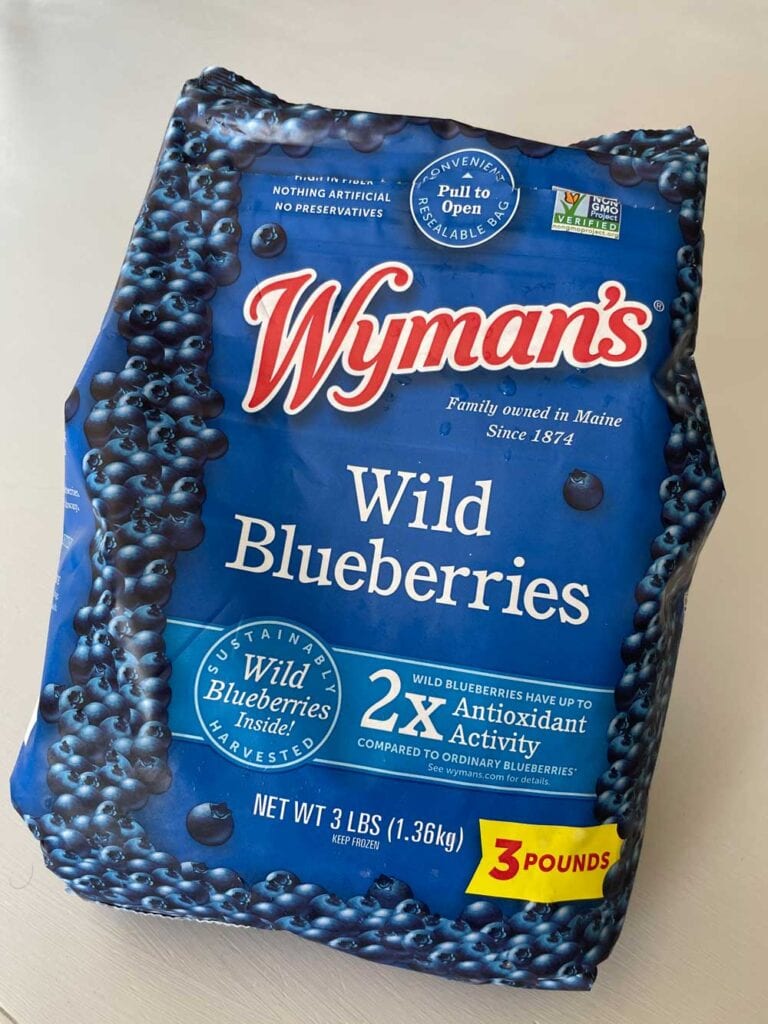
I prefer fresh produce for my family, but growing blueberries in the Black Hills of South Dakota is nearly impossible. When I first developed this blueberry jam recipe from frozen blueberries years ago, I was so pleasantly surprised at how delicious it turned out!
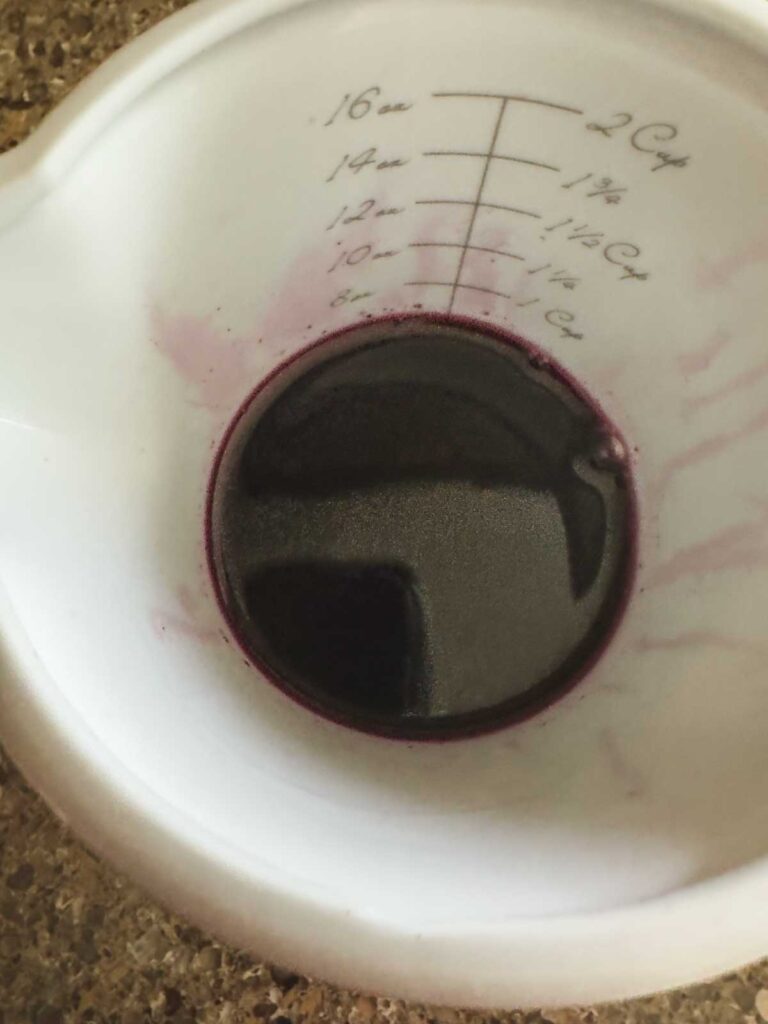
When thawing your frozen blueberries, be sure to reserve the juice, as it’s used in the recipe’s liquid component for added flavor.
What About Fresh Blueberries?
You can use fresh blueberries or a mix of fresh and frozen. If using fresh, choose firm, ripe berries. If you’re harvesting and don’t have time to make jam, freeze the berries at their peak ripeness to use later with this recipe.
Ingredients for Blueberry Jam
Making blueberry jam from frozen blueberries requires minimal ingredients. For a basic jam, you will need:
- Blueberries (frozen, or fresh if preferred)
- Sugar
- Lemon juice
- Pectin
- Water (or reserved blueberry juice)
- Butter (optional, to reduce foaming)
- Optional flavorings: vanilla extract, cinnamon, or nutmeg
Choosing The Right Pectin
Pectin comes from apples or citrus and it is a plant-based substance that helps in setting up the jam. Blueberries are naturally low in pectin, so I prefer to add powdered pectin. I also include lemon juice, which helps the pectin release. In case you missed my little disclaimer earlier, blueberry jam does not gel up like you see many other fruit jams and jellies. Even with pectin, the consistency is closer to a soft jelly or preserve.
The Sugar Factor
Sugar sweetens the jam, aids in setting, and acts as a preservative. For a low-sugar option, try Pomona’s Pectin, which allows you to reduce sugar while maintaining a good set. Too much sugar can make the jam overly sweet or gritty, while too little can affect the set or preservation. Natural sweeteners can be substituted, but sweetness levels vary, so adjust carefully (not always a 1:1 ratio).
Tools You Need
Making jam requires some basic kitchen tools like:
- Large heavy-bottomed pot (4–6 quart)
- Kitchen scale (for precise measurements)
- Fine-mesh strainer (for draining berries)
- Immersion blender or potato masher
- Measuring cups/spoons
- Canning jars with lids and bands
- Funnel
- Jar grabber
- Headspace tool or ruler
- Small plate (for optional gel test)
Check out my post about budget canning, including supplies and costs.
Making the Blueberry Jam
Checking the Blueberry Jam’s Consistency
When using commercial pectin, as in this recipe, the USDA states that testing the jam’s consistency (e.g., with a plate or spoon test) isn’t necessary, as the pectin ensures a set if the recipe is followed precisely. However, if you want to confirm the set, you can use a plate test: Place a small plate in the freezer for 10 minutes, spoon a small amount of hot jam onto it, freeze for 1 minute, and push with your finger. If it wrinkles and holds its shape, it’s ready.
Storing Your Finished Jam
Once the jam is ready, transfer it to clean, sterilized jars and let it cool. Seal and refrigerate for up to 3 weeks, or freeze for up to 1 year.
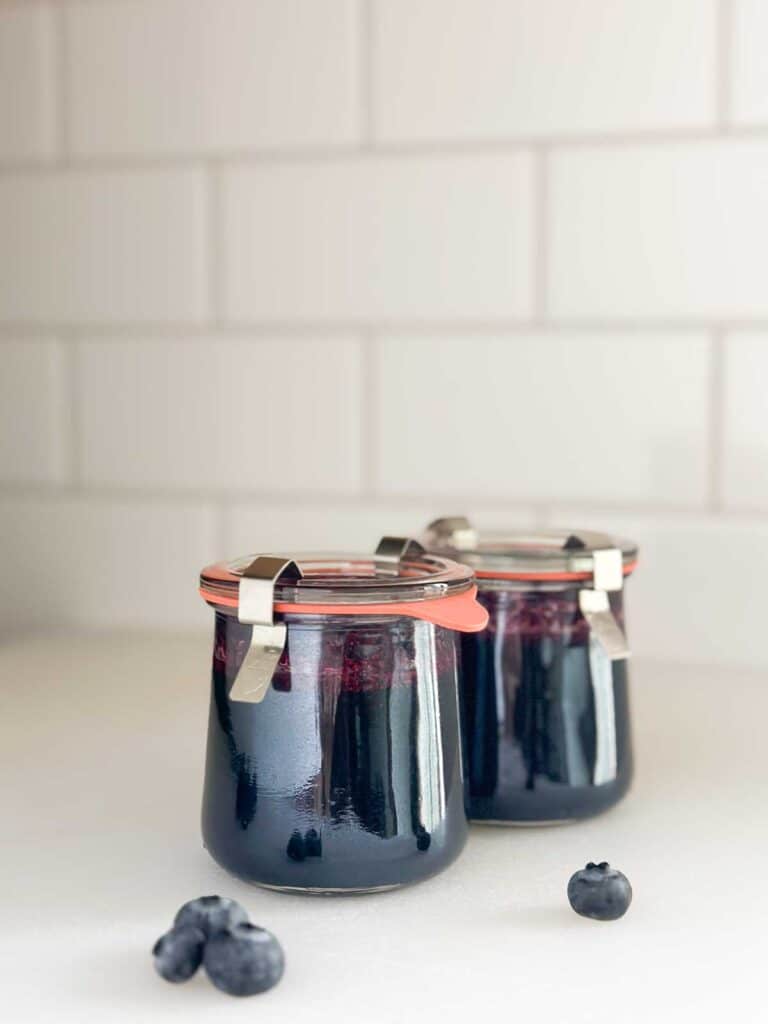
Canning the Blueberry Jam from Frozen Blueberries
For longer storage, process the jam in a water bath canner to extend shelf life to about 1 year. The recipe below includes detailed canning instructions.
Ways to Enjoy Your Blueberry Jam
Now that your homemade blueberry jam from frozen blueberries is ready, there are numerous ways to enjoy it. Spread it on toast, muffins, or biscuits. Stir it into yogurt, oatmeal, or smoothies. Use it as a filling for cheese Danish, cheesecake, or thumbprint cookies. Or simply spoon it over ice cream for a quick and delicious dessert.
Conclusion on Making Blueberry Jam from Frozen Blueberries
Making homemade blueberry jam from frozen berries is a rewarding experience that can be enjoyed year-round. Hopefully, you see that it is a simple process well worth the work. So, the next time you spot a bag of frozen blueberries, remember to whip up a batch of homemade blueberry jam from frozen blueberries.
Blueberry Jam from Frozen Blueberries
Print Recipe
Ingredients
- 5 c. frozen blueberries, thawed & juice reserved (*see instructions for beginning weight) 600-650g
- 1 tbsp. lemon juice, bottled
- 5 ½ c. granulated sugar 1,100g
- ¾ c. liquid (reserved blueberry juice & water) 180g
- 1 tsp. butter, optional (to reduce foaming) optional
- 1 (1.75 oz) box powdered pectin
Optional Flavorings
- ½ tsp nutmeg or cinnamon
- 1 tsp vanilla extract
Instructions
Prepare Berries
- Weigh 800–900 grams of frozen blueberries and thaw completely in a large bowl (refrigerate overnight or use a microwave on low defrost setting).
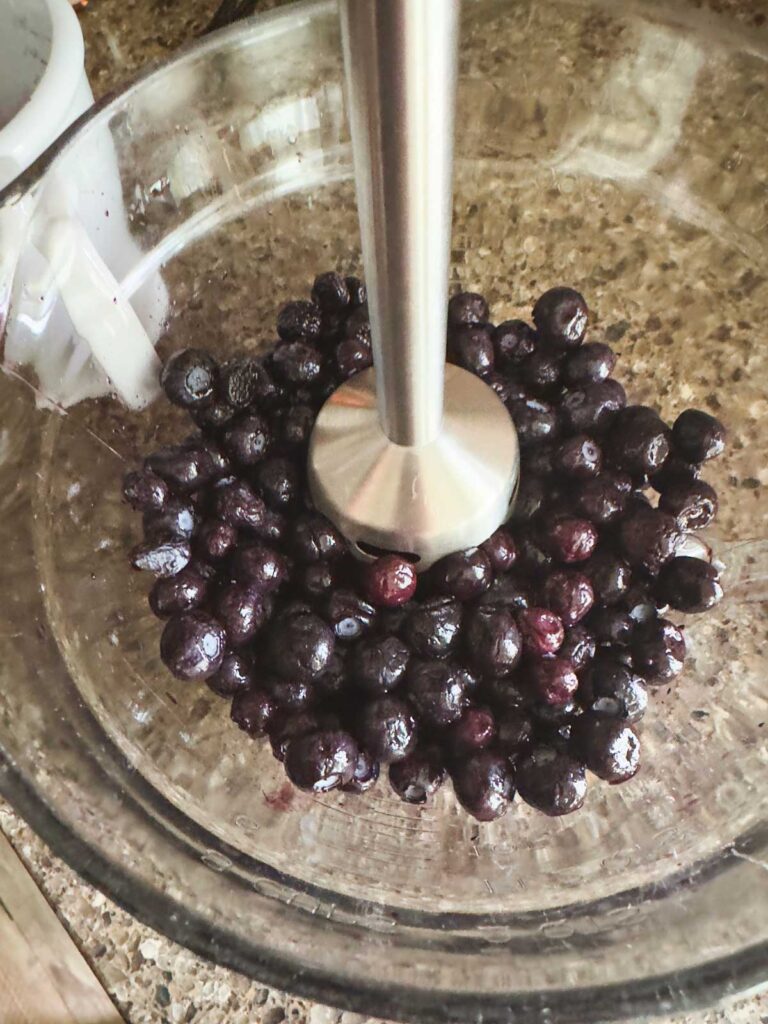
- Drain thoroughly through a fine-mesh strainer, reserving the juice. Weigh 600–650 grams (about 5 cups) of drained blueberries. If short, thaw and drain additional berries to reach the target weight.
- Measure exactly ¾ cup (180 g) of liquid using reserved juice, adding water only if needed. Do not exceed ¾ cup to ensure proper gelling.
Crush Berries
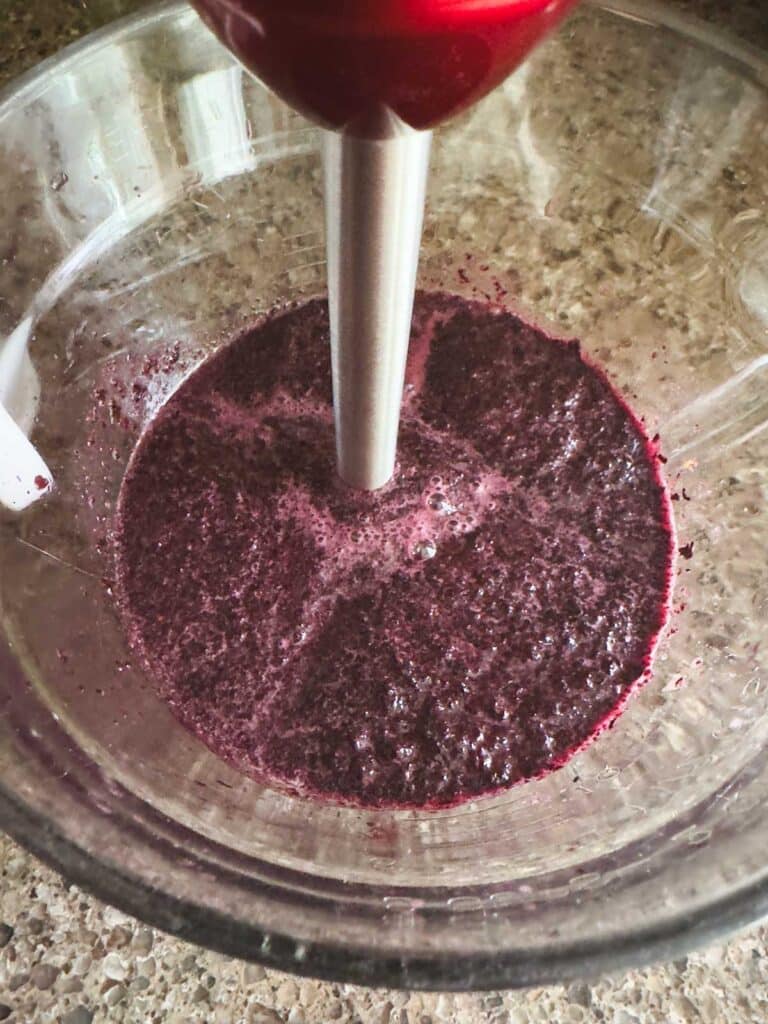
- Use an immersion blender or potato masher to crush the drained berries to your preferred consistency (smooth or chunky).
Cook the Jam
- In a large, heavy-bottomed pot, combine the crushed berries, ¾ cup liquid, 1 tbsp lemon juice, and powdered pectin. Stir well to dissolve pectin.
- Bring to a full rolling boil (a boil that doesn’t stop when stirred) over high heat, stirring constantly to prevent scorching.
- Add 5½ cups (1,100 grams) sugar, optional butter, and optional flavorings (½ tsp nutmeg/cinnamon or 1 tsp vanilla). Stir to dissolve sugar.
- Return to a full rolling boil and boil for exactly 1 minute, stirring constantly.
Test Consistency (Gel Test)
- To ensure proper set, place a small plate in the freezer for 10 minutes. Spoon a small amount of hot jam onto the chilled plate, return to the freezer for 1 minute, then push the jam with your finger. If it wrinkles and holds its shape, it’s ready. If too runny, boil for an additional 30–60 seconds and retest.
- Remove from heat and skim any foam with a spoon.
Store or Can
- Refrigerator/Freezer Storage: Pour jam into clean containers, cool, and refrigerate for up to 3 weeks or freeze for up to 6 months.
- To Water Bath Can: Sterilize 6–7 half-pint jars by boiling for 10 minutes (or use a dishwasher’s sterilize cycle). Keep jars hot.
- Pour hot jam into hot jars, leaving ¼ inch headspace (use a headspace tool or ruler for accuracy). Wipe rims with a clean, damp cloth.
- Place prepared flat lids on jars and screw bands to fingertip tight (tighten until resistance is met, then a slight turn more).
- Place jars in a water bath canner with water covering jars by at least 1 inch. Bring to a boil and process for 5 minutes at sea level (adjust for altitude: 7 minutes for 1,001–3,000 feet, 10 minutes for 3,001–6,000 feet, 15 minutes for above 6,000 feet).
- Turn off heat, let jars sit in the canner for 5 minutes, then remove with a jar grabber. Place on a towel-lined surface and cool undisturbed for 12–24 hours.
- Check seals: Press the center of each lid; it should not flex. Alternatively, tap with a spoon for a clear, ringing sound. Refrigerate or freeze any unsealed jars.
- Remove screw bands, wipe jars clean with soapy water, and store in a cool, dark place for up to 1 year.
Notes
- Liquid Control: Use exactly ¾ cup (180 g) liquid (juice + water) to avoid a runny jam. Excess liquid from undrained berries can prevent proper gelling.
- Blueberry Measurement: Start with 800–900 grams frozen blueberries to ensure 600–650 grams of drained berries after thawing. Weighing after draining ensures the correct fruit solids for a proper set.
- Troubleshooting Runny Jam:
- Ensure a full rolling boil for 1 minute after adding sugar to activate pectin.
- Use the gel test to confirm set before jarring.
- If jam remains runny after cooling, reprocess with additional pectin (follow package instructions) or store in the refrigerator/freezer.
- Pectin: Use standard powdered pectin (e.g., Sure-Jell regular). Low-sugar pectin with 3–4 cups (600–800 grams) sugar can be used for a firmer, less sweet jam, following package instructions. Altitude: Adjust water bath processing time based on your altitude to ensure safe canning.
- Flavor Tip: To enhance blueberry flavor without excess liquid, simmer reserved juice to reduce slightly (e.g., reduce 1 cup to ¾ cup) before measuring.
As an Amazon Associate, I earn from qualifying purchases at no extra cost to you. Thank you for your support!



Can I place your jam on a shelf in my pantry. I don’t have room in my freezer for anything else
Hi Merle,
Yes, this blueberry jam is shelf-stable and can remain in the pantry until you open it to enjoy.
Happy Canning!
How many jars are needed for recipe ?? Article does not say…
Hi there! The recipe makes a total of four half-pint jars.
I tried this recipe and we love it!
I used 9 jam jars (260ml)
Can I double this recipe
Hi Mary, I do not recommend you double the recipe.
can I try to water bath my jars again if they don’t deal the 1st time?
Yes, you sure can! I’ve done that before and it works well!!
Sorry, new to canning. 👶🏻 Do I measure the 5 cups of blueberries pre-defrosting or post defrosting? Need to know as the volume is quite different. Thanks!
Hi LM! Thank you so much for your comment and for bringing this ambiguity to my attention! I’m so sorry for the delayed response—it’s been a busy summer, and I’m just catching up now.
You’re absolutely right that the volume of frozen versus thawed blueberries can be quite different, and I appreciate you pointing out the need for clarity.
To answer your question: You should measure the 5 cups (about 600–650 grams) of blueberries after thawing and draining the juice. This ensures the correct amount of fruit solids for a proper jam set. To make this crystal clear, I’ve revamped the recipe instructions and added weight measurements for precision. The updated recipe now advises starting with 800–900 grams of frozen blueberries, thawing them completely, draining the juice (which you’ll use for the ¾ cup liquid component), and then measuring 600–650 grams of drained berries. This should help avoid any confusion and ensure a great texture for your jam.
Thanks again for your feedback—it really helped me improve the recipe for all our beginner canners out there! If you give it a try with the new instructions, I’d love to hear how it turns out. Happy canning!
Can I use other fruits rather than blueberries?
Hi Darlene! Thanks for your question! You can use frozen fruit to make jam recipes. However, each fruit has unique factors, like pectin content and juiciness, that affect the set and sweetness. For the best results, it’s worth checking specific recipes tailored to each fruit to ensure a properly set and delicious jam. I’d love to hear what you try—happy canning!